Invoice vs Receipt: What’s the Difference and When to Use Each
Freelancers and small business owners mix up invoices and receipts more often than you’d think. Both documents involve money, both go to your client, and both feel official. But they do different jobs.
An invoice is a request for payment. A receipt confirms that payment already happened. That one distinction, invoice vs receipt, decides which document you send and when.
This guide walks through real examples, a full comparison table, and the exact steps for turning a paid invoice into a receipt. You’ll also find free tools to create both without signing up for anything.
What Is an Invoice?
An invoice is a document a seller sends to a buyer asking for payment. It’s the formal way of saying “here’s what you owe me.”
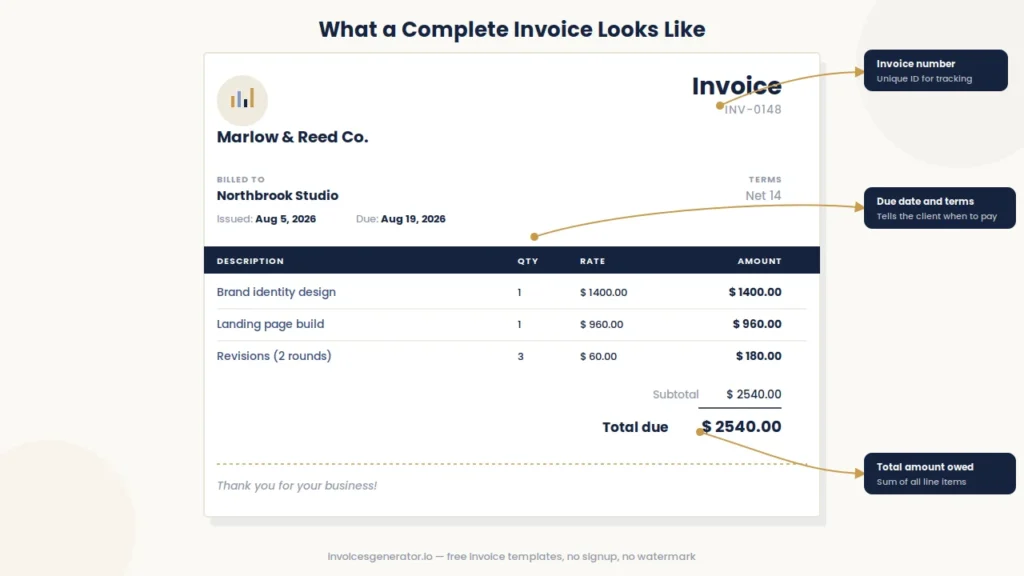
You send it after finishing a job or delivering goods, but before the client pays you. It’s not proof of payment. It’s a request for one.
A solid invoice usually includes:
- A unique invoice number
- Your business name and contact details
- The client’s name and contact details
- An itemized list of goods or services provided
- Payment terms and due date
- Total amount owed
Without these basics, clients get confused about what they’re paying for and when it’s due. That confusion is usually what causes late payments, not bad intentions.
Example of an Invoice
Say you’re a freelance web designer. You just finished a client’s site redesign. You send an invoice for $1,200, due in 14 days, with the project scope broken into three line items: design, development, and revisions.
The client hasn’t paid yet. They just know what they owe and when it’s due.
What Is a Receipt?
A receipt is a document you send after payment clears. It confirms the money actually came through.
Think of it as the closing step. The invoice opened the request. The receipt closes it out.
A basic receipt usually includes:
- Business name and contact details
- Date the payment was made
- Amount paid
- Payment method used
- Reference to the original invoice number, if one exists
Receipts matter more than people realize. They’re what clients need for their own expense records, and they’re what protects you if a payment ever gets disputed later.
Example of a Receipt
Back to the web designer. The client pays that $1,200 invoice through a bank transfer. You send a receipt confirming the payment, the date it landed, and the method used.
Now both sides have a clean paper trail. The client has proof they paid. You have proof you got paid.
Invoice vs Receipt at a Glance
An invoice requests payment. A receipt confirms payment was received. Everything else follows from that one difference.
The table below breaks down invoice vs receipt across the details that actually matter for your records.
| Detail | Invoice | Receipt |
|---|---|---|
| Purpose | Requests payment | Confirms payment |
| Timing | Sent before payment | Sent after payment |
| Issued by | Seller or service provider | Seller or service provider |
| Sent to | Buyer or client | Buyer or client |
| Contains | Itemized costs, due date, payment terms | Amount paid, payment method, date |
| Legal weight | Can outline binding sale terms | Evidence that payment was completed |
| Accounting treatment | Recorded as accounts receivable | Recorded as income |
Keep this table handy. It covers the core differences in one glance, without digging through paragraphs.
Invoice vs Receipt: The Real Differences Explained
Knowing the difference on paper is one thing. Seeing why it matters in real situations is another.
Timing: Before Payment vs After Payment
An invoice goes out first. A receipt follows once the money lands.
Most freelancers send the invoice right after finishing a project or hitting a milestone. The receipt comes later, once payment clears.
There’s an exception worth knowing. Subscription businesses and retainer clients sometimes invoice after the service period ends, not before it starts. The sequence still holds. Payment request first, payment confirmation after.
Purpose: Request vs Confirmation
An invoice starts the transaction. A receipt closes it.
This sounds simple, but mixing up the two causes real problems. Send a receipt instead of an invoice and your client has no formal request to act on. Send an invoice as if it were a receipt and you risk confusing your own bookkeeping, since the payment was never actually confirmed.
What Information Each One Includes
Invoices carry more detail than receipts. That’s because an invoice has to justify the amount owed.
- Invoices list itemized costs, quantities, and payment terms
- Receipts simply confirm what was paid and how
Itemized detail protects you if a client questions a charge months later. A receipt doesn’t need that depth since the amount is already settled.lds down side by side, so this section focuses on the reasoning instead of repeating the list.
Accounting Treatment: Accounts Receivable vs Income
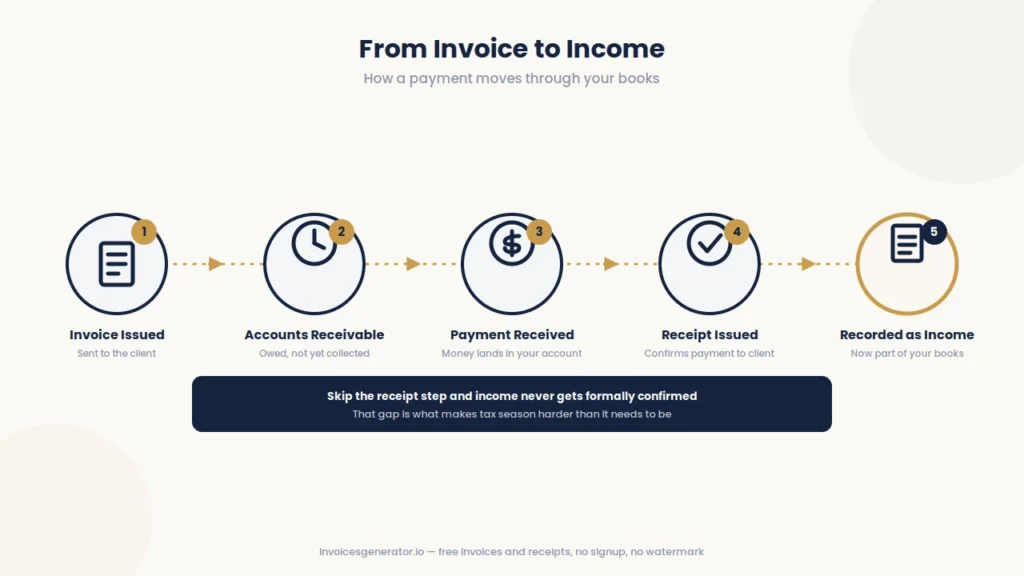
This is where a lot of guides stop short, especially for freelancers doing their own books.
Here’s how it actually flows:
- You issue the invoice
- The amount sits in your accounts receivable, meaning money you’re owed but haven’t collected
- The client pays
- You issue the receipt
- That amount now moves into recorded income
Skip the receipt step and your books get messy fast. You’ll have income that was never formally confirmed, which makes tax season harder than it needs to be.
Legal Weight: Can Either One Be Used in Court or an Audit
Both documents carry weight, just in different ways.
An invoice can serve as evidence of agreed terms, especially if a client disputes what was owed. A receipt serves as evidence that payment was actually completed, which matters during audits or tax reviews.
Neither replaces a signed contract. But together, they build a paper trail that holds up when someone asks questions later.
Invoice vs Receipt vs Bill (What About a Bill?)
A bill adds a third term into the mix, and it trips people up just as much.
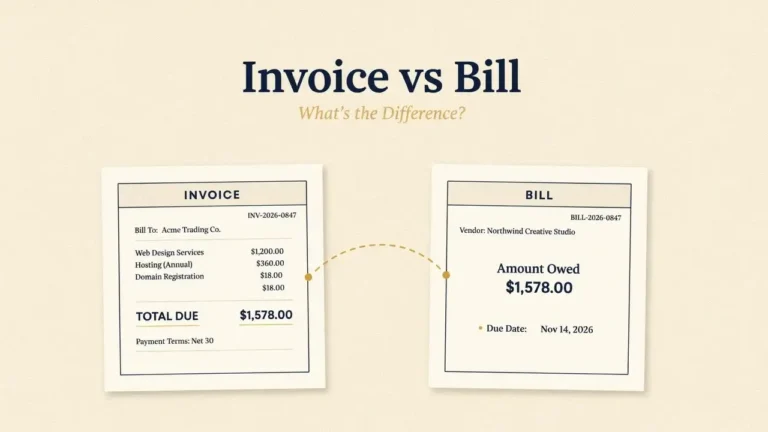
Here’s the simple way to think about it. An invoice is sent. A bill is received. The moment your client gets your invoice, they usually start calling it a bill.
- Invoice: what you send as the seller
- Bill: what the same document becomes once the buyer receives it
- Receipt: what follows once payment is made
Same document, different names depending on which side of the transaction you’re on.
A restaurant makes this easier to picture. You get the bill at the table and pay right away. There’s no waiting period, no due date, no separate invoice step. That’s different from freelance work, where the invoice goes out first and payment often comes days or weeks later.
So invoice vs receipt vs bill isn’t really three separate document types. It’s one transaction, described from different sides of the table.
Where Estimates, Quotes, and Purchase Orders Fit In
Invoices and receipts don’t exist alone. A few other documents show up earlier or later in the same process.
Estimate and Quote
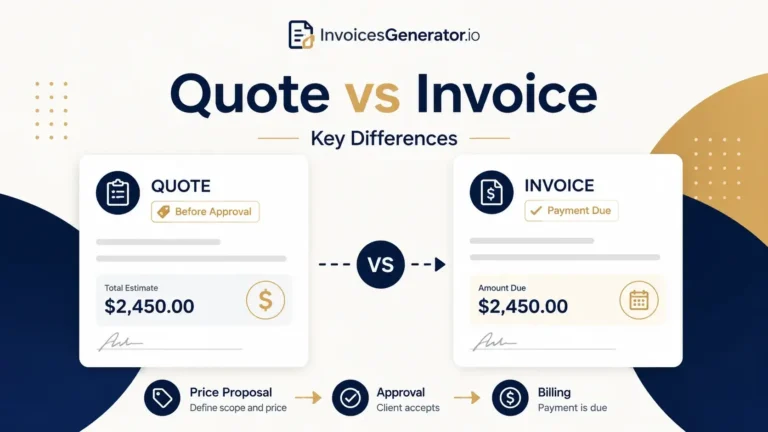
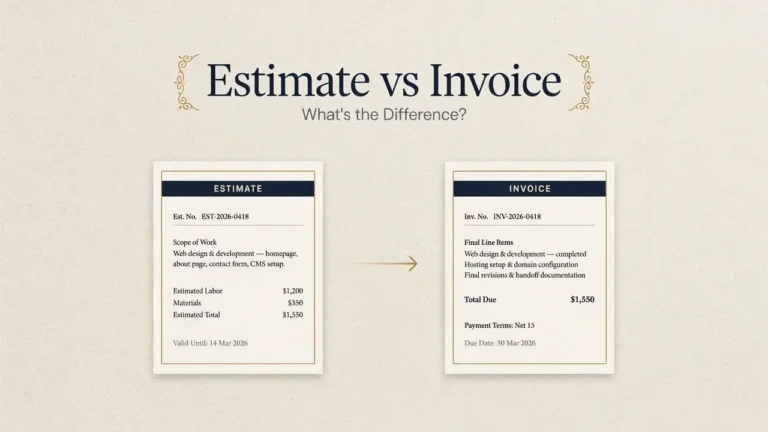
An estimate is a rough guess at cost, given before work starts. A quote is more fixed. Once a client accepts a quote, the price usually can’t change.
Purchase Order
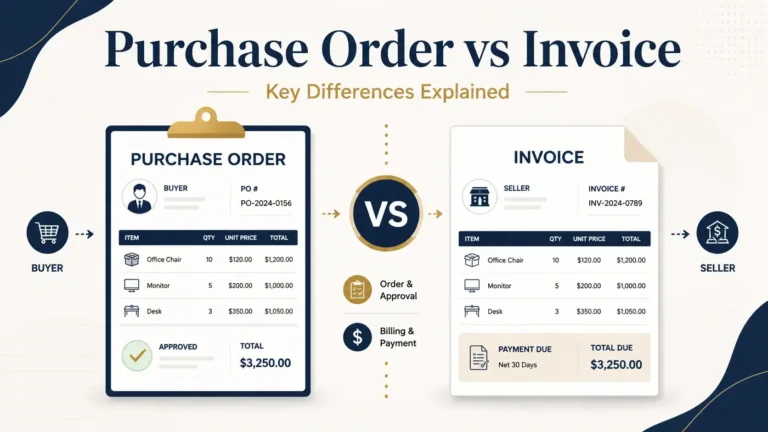
A purchase order comes from the buyer, not the seller. It confirms they intend to buy something, before any invoice gets created.
Statement
A statement summarizes several invoices and payments over a period, like a month. It shows the bigger picture, not just one transaction.
Here’s how these documents usually line up, from first contact to final record:
Quote or Estimate → Purchase Order → Invoice → Payment → Receipt → Statement
Each one plays a different role. Skipping steps, like jumping straight to an invoice without a quote, often leads to price disputes later.
Do You Need Both an Invoice and a Receipt?
In most cases, yes. Sending both keeps your records clean on both sides of the transaction.
There’s one exception worth knowing. At a point of sale, like a retail shop or a cafe, payment happens instantly. Only a receipt applies there, since there’s no gap between the request and the payment.
Freelance work and B2B transactions are different. Payment usually comes days or weeks after the invoice goes out. That gap is exactly why both documents matter.
Why Keeping Both Protects You in Disputes
Picture this. A client claims they never received an invoice, or insists they already paid. Without both documents, you’re stuck arguing from memory.
With both on hand, the dispute settles fast. The invoice shows what was agreed. The receipt shows what was actually paid.
Why Both Matter for Tax Season
Invoices and receipts serve different tax purposes.
- Invoices show what you’re owed, which matters for tracking income you’re expecting
- Receipts prove what you’ve actually collected, which is usually what’s needed to support expense claims and deductions
Keep both organized as you go. Digging through old emails during tax season costs more time than saving these documents ever did.
Can an Invoice Be Used as a Receipt?
No, not by default.
An invoice requests payment. It can’t prove payment happened, since it usually gets created before any money changes hands.
That said, there’s a workaround some small transactions use. Mark the invoice as “Paid,” add the payment date, and it can informally double as a receipt. This works fine for a quick one-off sale.
It’s not the cleanest approach though. Keeping invoices and receipts as separate documents makes your records easier to search later, especially once you’re juggling more than a handful of clients.
Common Mistakes People Make With Invoices and Receipts
A few habits cause more confusion than the invoice vs receipt distinction itself.
Thinking an Invoice Guarantees Payment
Sending an invoice doesn’t mean the money is on its way. Clients forget, delay, or need a reminder. Follow up still matters, even after the invoice goes out.
Skipping Receipts for Small or Digital Payments
A $20 payment through an app still deserves a receipt. Skipping it because the amount feels small leads to messy books later, especially at tax time.
Believing Printed Documents Are More Official Than Digital Ones
Digital invoices and receipts hold up just as well as paper ones. They’re also easier to find later, since you’re not digging through a folder or a shoebox.
Not Numbering Invoices and Receipts Separately
Give invoices their own numbering sequence, and receipts their own. Mixing the two makes it harder to track which document matches which transaction, especially once you’re managing dozens of clients.
When to Send an Invoice
Knowing the definition helps, but seeing it play out in real situations makes it easier to apply.
After Finishing a Project
This is the most common trigger. You wrap up the work, then send the invoice right away. Waiting too long after finishing often means waiting longer to get paid too.
When Requesting a Deposit Before Starting Work
Big projects sometimes need money upfront. Say you’re taking on a three month branding project. You send a deposit invoice for 30 percent before any work begins, which protects your time if the client backs out.
When Billing in Stages for a Long Project
Long projects don’t have to wait until the very end to get paid. Break the work into milestones, and send an invoice after each one. This keeps cash flowing instead of leaving you stuck for months.
When a Client Pays Without Asking First
Sometimes a client sends money through Venmo, Zelle, or a bank transfer before you’ve sent anything formal. In that case, send an invoice marked as already paid, so there’s still a record of what the payment covers.
When to Send a Receipt?
Right After Any Payment Clears
Send the receipt as soon as the money lands, not days later. It builds trust with the client and keeps your records current.
For Partial Payments or Deposits
Partial payments still need a receipt. Show the amount paid, the date, and the remaining balance still owed. This keeps both sides clear on what’s left.
When a Client Specifically Asks for One After Paying Informally
If a client pays outside a formal invoice, say through cash or a quick transfer, they may still ask for documentation afterward. A simple receipt covers this, even without an invoice tied to it.
Turning an Invoice Into a Receipt (Step by Step)
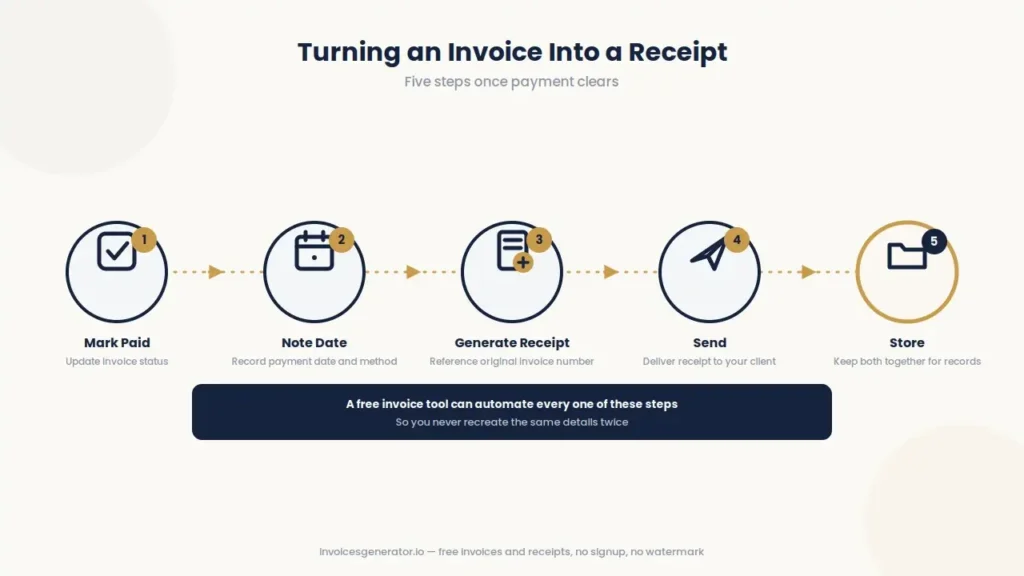
Once payment clears, converting that invoice into a receipt only takes a few steps.
- Mark the original invoice as paid
- Note the payment date and method used
- Generate a receipt that references the original invoice number
- Send the receipt to your client
- Store both documents together for your records
This is exactly the kind of task a free invoice tool should handle automatically, so you’re not recreating the same details twice.
What Must Be on an Invoice (Checklist)
A complete invoice should include:
- Business name and contact info
- Client name and contact info
- Unique invoice number
- Issue date
- Due date
- Itemized goods or services
- Payment terms
- Total amount due
- Accepted payment methods
Missing even one of these often leads to a client asking questions before they pay, which slows everything down.
What Must Be on a Receipt (Checklist)
A complete receipt should include:
- Business name and contact details
- Date of payment
- Amount paid
- Payment method
- Reference to the original invoice number, if one exists
- Remaining balance, if the payment was partial
Keep this list handy, especially if you’re issuing receipts by hand or through a basic template.
Invoice vs Receipt Rules Outside the US (Quick Notes)
Rules shift a bit outside the US, especially around tax documentation.
Countries like Malaysia, the UK, and EU nations often require a tax invoice that goes beyond the basics covered here. These usually include VAT or GST details specific to that region.
If you’re billing clients outside the US, check your local tax authority’s rules before finalizing your invoice format. What counts as compliant in one country may fall short in another.
Frequently Asked Questions
Is an invoice proof of purchase?
No. An invoice only shows that payment was requested. A receipt is what proves the purchase was completed.
What comes first, an invoice or a receipt?
The invoice comes first. It requests payment. The receipt follows once that payment clears.
Do freelancers need to send both invoices and receipts?
Yes, in most cases. The invoice sets the payment terms. The receipt confirms the client actually paid.
Can a small business skip invoices and just use receipts?
Only at the point of sale, like a retail shop where payment happens instantly. For work billed after the fact, an invoice still comes first.
What is the difference between invoice number and receipt number?
They’re separate numbering sequences. An invoice number tracks the payment request. A receipt number tracks the confirmed payment, even if it references the original invoice.
Is a receipt required by law?
It depends on your location and industry. Many regions require receipts for certain transactions, so check local tax rules to confirm.
What happens if I lose an invoice or receipt?
Try to recreate it from your records or payment history. Going forward, store both documents digitally so they’re easier to find later.
Create Free Invoices and Receipts in Seconds
That’s the full picture of invoice vs receipt. One requests payment. The other confirms it. Both matter for clean records and a smoother client relationship.
If you’re still creating these by hand, there’s a faster way. Generate professional invoices and receipts in seconds, completely free, with no signup and no watermark. Create your free invoice now at InvoicesGenerator.io