Purchase Order vs Invoice: What’s the Difference?
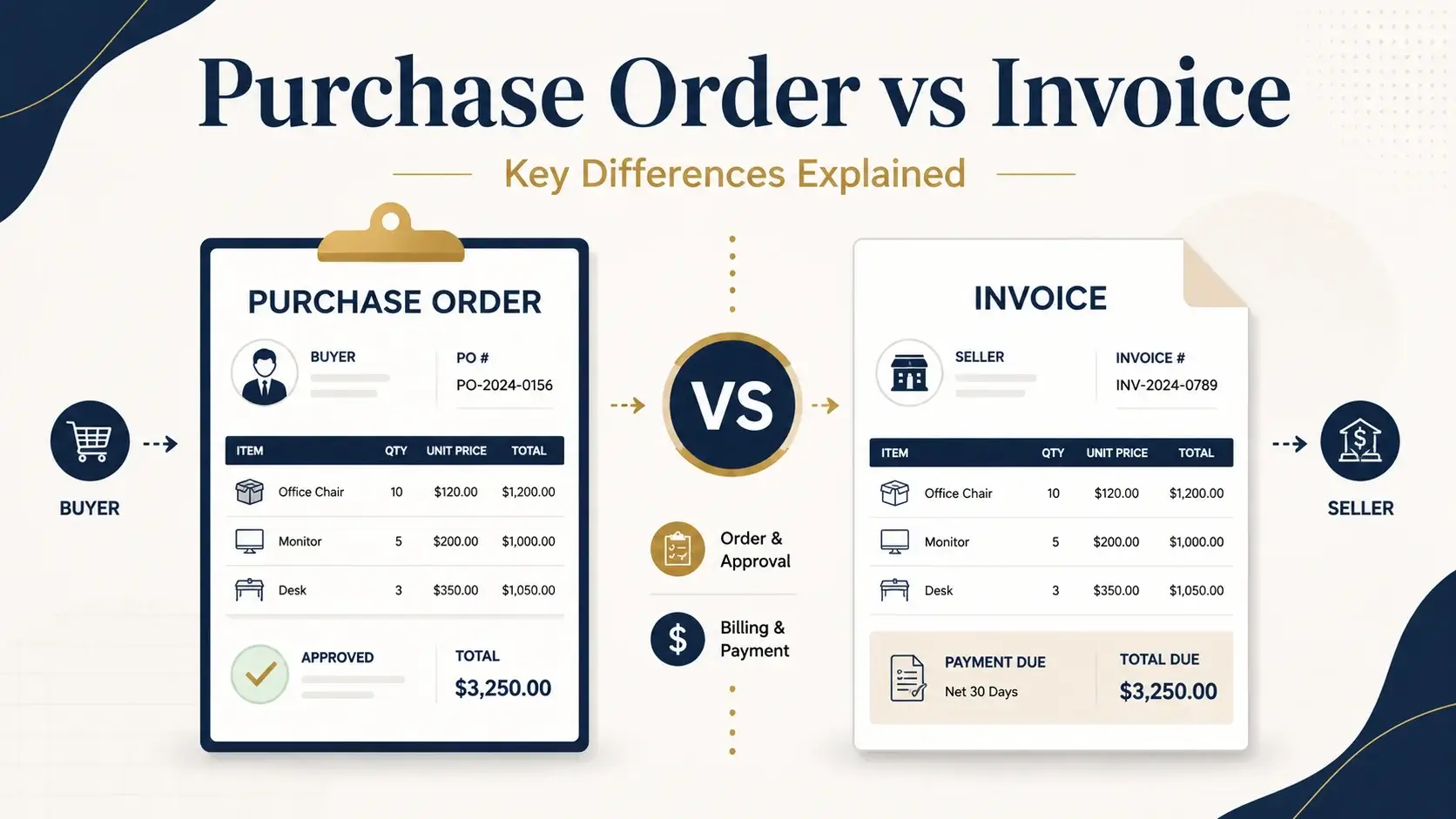
A purchase order vs invoice comparison starts with one simple distinction. A buyer usually creates a purchase order before receiving goods or services. The seller then issues an invoice to request payment from that buyer.
Both documents can show products, quantities, prices, terms, and business details. However, they serve different purposes during the purchasing and payment process.
A purchase order helps authorize and document what the buyer intends purchasing. An invoice records what the seller has supplied and requests payment.
Understanding that sequence helps businesses prevent pricing mistakes and payment delays. It also makes procurement, accounts payable, and supplier records easier to manage.
Purchase Order vs Invoice at a Glance
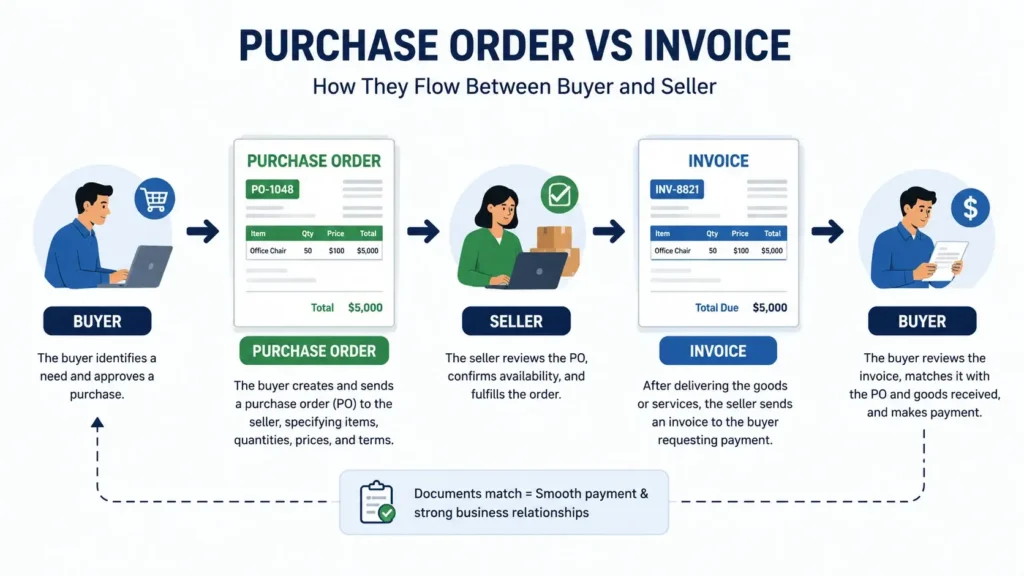
The easiest way to separate these documents is by direction and purpose. The buyer sends the purchase order, while the seller sends the invoice.
A purchase order confirms what the buyer intends to purchase. An invoice tells the buyer how much payment is now requested.
| Feature | Purchase Order | Invoice |
|---|---|---|
| Created by | Buyer or purchasing team | Seller or supplier |
| Sent to | Seller or vendor | Buyer or customer |
| Main purpose | Authorizes or confirms a purchase | Requests payment |
| Usually created | Before fulfillment | After delivery or according to billing terms |
| Main identifier | PO number | Invoice number |
| Shows products or services | Yes | Yes |
| Shows quantities and prices | Usually | Usually |
| Includes payment terms | Often | Usually |
| Requests payment | No | Yes |
| Used by accounts payable | For approval and matching | For payment processing |
| Can reference a PO number | Not applicable | Yes |
The biggest difference is not how these documents look. Their role within the business transaction makes them different.
A PO supports purchasing approval and records the buyer’s order. The invoice supports billing, accounts receivable, and payment collection.
The two documents often work together during procurement and accounts payable. Matching them helps confirm quantities, prices, and agreed payment terms.
What Is a Purchase Order?
A purchase order, or PO, is created by the buyer. It records what the business wants to purchase from a supplier.
Companies usually issue purchase orders before goods arrive or services begin. A PO helps confirm approved prices, quantities, terms, and delivery expectations. It also gives procurement and accounting teams a clear purchasing record.
What Information Does a Purchase Order Include?
Most purchase orders contain these important details:
- Unique purchase order number
- Buyer and supplier information
- Product or service descriptions
- Quantities and unit prices
- Total purchase value
- Delivery or shipping details
- Requested delivery date
- Taxes or discounts
- Agreed payment terms
The PO number helps both businesses track the approved transaction. Suppliers may later reference that number on the related invoice.
Who Creates a Purchase Order?
The buyer normally creates and sends the purchase order. Larger companies may assign this task to procurement or purchasing teams.
An employee may first request approval before the PO gets issued. The supplier then receives the order and reviews its purchasing terms.
A purchase order does not normally request payment from the buyer. Its main role is documenting and authorizing the planned purchase.
What Is an Invoice?
An invoice is a payment request created by the seller. It records what was supplied and what the buyer must pay.
Businesses issue invoices according to their agreed billing arrangements. Many invoices follow delivery, while others cover deposits or project milestones.
What Information Does an Invoice Include?
Most invoices include these common details:
- Unique invoice number
- Invoice issue date
- Seller and customer information
- Product or service descriptions
- Quantities and unit prices
- Subtotal and total amount
- Taxes and discounts
- Payment terms
- Payment due date
- Purchase order reference, when required
The invoice number identifies the seller’s individual billing record.
A PO number may also appear to connect approved purchasing records.
Who Creates an Invoice?
The seller, supplier, or vendor normally creates the invoice. The document is then sent to the buyer for payment.
Larger businesses may use accounting teams for invoice creation and tracking. The buyer’s accounts payable team reviews invoices before releasing payment.
Unlike a purchase order, an invoice directly requests money from the buyer.
Purchase Order vs Invoice: Key Differences
The main differences involve purpose, timing, document ownership, and payment status.
Both documents support the same transaction but perform different business functions.
Purpose
A purchase order confirms what the buyer has approved for purchase. An invoice tells the buyer how much payment the seller requests.
The first controls purchasing, while the second supports billing and collection.
Timing
Purchase orders usually appear before goods or services are fulfilled. Invoices follow the billing schedule agreed between buyer and seller.
Some invoices cover deposits, milestones, subscriptions, or advance payment arrangements.
Buyer and Seller Roles
The buyer normally creates the PO and sends it to suppliers. The seller normally creates the invoice and sends it to customers.
Procurement manages purchasing, while accounts payable handles supplier invoice approval.
Payment Request
A purchase order does not normally request money from the buyer. An invoice states the amount due and applicable payment terms.
This difference separates purchasing authorization from the actual billing process.
Purchase Order Date vs Invoice Date
The PO date shows when the buyer issued the purchase order. The invoice date shows when the seller created the billing document. These dates may differ by several days, weeks, or project stages.
Purchase Order Number vs Invoice Number
A PO number and invoice number identify two different business records. The buyer creates the purchase order number for its purchasing system.
The seller creates the invoice number for its billing records.
For example:
- Purchase order number: PO-1048
- Invoice number: INV-8821
- PO reference on invoice: PO-1048
The PO number connects billing with the buyer’s approved purchase. The invoice number identifies the seller’s individual request for payment.
Where Does the PO Number Go on an Invoice?
The PO number usually appears near the invoice header information. Some businesses place it inside a dedicated reference or purchase-order field.
Suppliers should use the exact PO number provided by customers. They should not invent one when no purchase order exists.
How Do Both Numbers Connect?
One purchase order can support one or several related invoices. That often happens with partial deliveries or milestone-based service billing.
Each invoice keeps its own number while referencing the same PO.
How Purchase Orders and Invoices Work Together
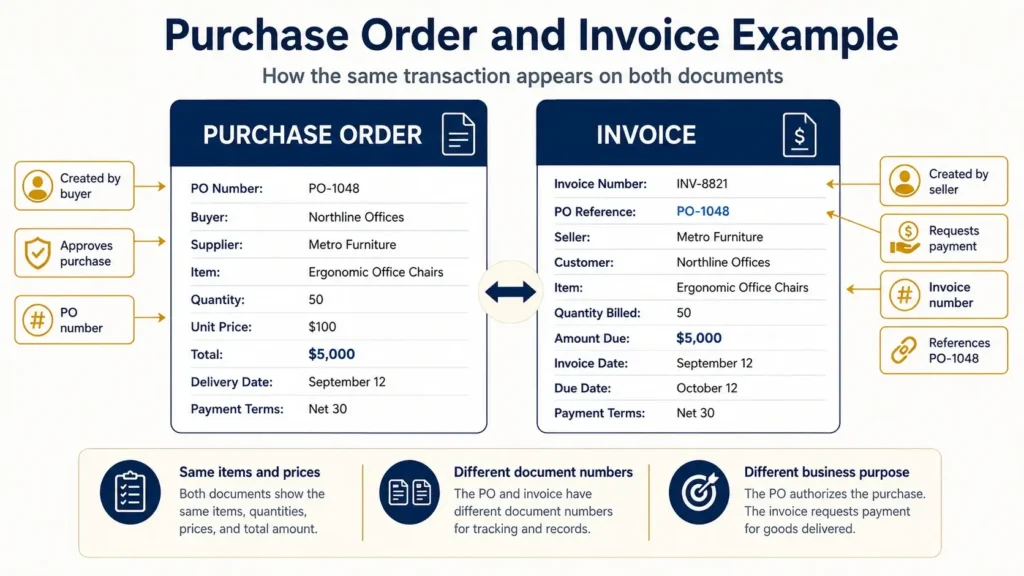
Purchase orders and invoices usually connect different stages of one transaction. The buyer approves the purchase first, then the seller handles billing.
A typical flow looks like this:
- The buyer identifies what goods or services are needed.
- The buyer creates and sends a purchase order.
- The supplier reviews and fulfills the approved order.
- The supplier sends an invoice for the agreed amount.
- The buyer checks the invoice against purchasing records.
- Accounts payable approves and processes the payment.
For example, Northline Offices orders 50 chairs from Metro Furniture. The buyer issues PO-1048 for 50 chairs at $100 each. Metro Furniture delivers the chairs and sends invoice INV-8821. That invoice references PO-1048 and requests the agreed $5,000 payment. This simple sequence shows how both documents support one transaction.
Add customer details, items, payment terms, and purchase order references, then create a clean professional invoice in minutes.
Create Free Invoice →Purchase Order and Invoice Example
The purchase order might contain:
- PO number: PO-1048
- Quantity: 50 chairs
- Unit price: $100
- Total: $5,000
- Delivery date: September 12
The matching invoice might contain:
- Invoice number: INV-8821
- PO reference: PO-1048
- Quantity billed: 50 chairs
- Amount due: $5,000
- Payment terms: Net 30
The values may look similar, but their purpose remains different.
Do You Need Both a Purchase Order and Invoice?
Not every business transaction requires both documents to be created. Many companies use both because they serve different financial purposes.
Purchase orders help control spending before suppliers fulfill approved purchases. Invoices then request payment under the agreed commercial and billing terms.
Businesses commonly use both documents for:
- Larger purchases requiring approval before committing company funds.
- Inventory orders involving quantities, prices, and delivery schedules.
- Multiple suppliers managed across departments or business locations.
- Transactions requiring documented purchasing and payment controls.
Smaller transactions may proceed without formal purchase orders. Freelancers and service providers often work under contracts or agreements.
Can You Invoice Without a Purchase Order?
Yes, sellers can issue invoices without an existing purchase order. Whether buyers accept them depends on their internal purchasing policies.
Common non-PO situations include:
- Freelance projects covered by signed service agreements.
- Recurring services billed under existing customer contracts.
- Utility bills and routine business expenses.
- Emergency purchases approved outside normal procurement procedures.
Suppliers should confirm customer requirements before sending invoices without PO references.
PO Invoice vs Non-PO Invoice
A PO invoice references an approved purchase order from the buyer.
A non-PO invoice has no related purchase order for matching.
The main difference concerns approval, documentation, and accounts payable processing.
What Does “No PO, No Pay” Mean?
Some companies require valid PO numbers before processing supplier invoices. This policy is often called “No PO, No Pay.”
Missing PO details can delay invoice approval and supplier payment. Suppliers should request the correct PO number before submitting invoices. They should never create their own customer purchase order number.
What If the Invoice Does Not Match the Purchase Order?
An invoice mismatch happens when billed details differ from approved purchase terms.
Common differences involve prices, quantities, taxes, discounts, or delivery charges.
Accounts payable should review these differences before approving supplier payment.
Price Differences
Suppose a purchase order approves 100 units at $25 each. The approved order value would therefore equal $2,500 before taxes.
If the invoice shows $27 per unit, investigate the difference. The buyer may confirm an approved change or request correction.
Quantity Differences
Quantity mismatches often happen when suppliers deliver orders in several shipments.
A buyer might order 100 units but receive only 60. An invoice for 60 units could still match received quantities.
Billing all 100 units may require additional review before payment.
Partial Deliveries and Multiple Invoices
One purchase order can support several invoices across separate deliveries.
For example:
- Purchase order: 100 units worth $2,500.
- First delivery: 60 units, invoiced for $1,500.
- Second delivery: 40 units, invoiced for $1,000.
Both invoices can reference the same original purchase order number. Tracking remaining balances helps prevent duplicate or excessive supplier billing.
How Invoice Matching Works
Invoice matching checks whether supplier billing agrees with approved purchasing records. Businesses use matching before accounts payable approves invoices for payment.
The process usually compares prices, quantities, terms, and receiving information.
Two-Way Matching
Two-way matching compares the supplier invoice with the purchase order. Accounts payable checks whether important details match across both documents.
Typical checks include quantities, unit prices, payment terms, and item descriptions. This method often works well for straightforward service-based business purchases.
Three-Way Matching
Three-way matching adds a receiving record to the document comparison. It checks the purchase order, receiving record, and supplier invoice.
The buyer confirms what was ordered, received, and finally billed.
For example, a purchase order may approve 100 physical units.
If only 80 arrive, billing 100 units needs further review. This method helps prevent payments for missing or incorrect deliveries.
Goods Versus Services
Physical goods often require delivery records before invoice approval happens. Services may rely on completed milestones or manager approval instead.
The matching method should reflect how each purchase is actually fulfilled.
Are Purchase Orders and Invoices Legally Binding?
Purchase orders and invoices can carry legal significance, depending on circumstances. A purchase order may become binding after the supplier accepts it.
Existing contracts and agreed terms can also affect each party’s obligations.
An invoice usually records the seller’s request for payment. It does not automatically create the underlying agreement by itself.
Legal effect can depend on acceptance, contract terms, and local law.
Businesses should review disputed transactions with qualified legal professionals when needed.
Common Purchase Order and Invoice Mistakes
Small document errors can delay approvals, payments, and supplier reconciliation.
Common problems include:
- Missing PO numbers when customers require purchase order references.
- Incorrect unit prices compared with the buyer’s approved terms.
- Duplicate invoices submitted for the same goods or services.
- Quantity errors that do not match delivered or received amounts.
- Payment terms that differ from the original purchasing agreement.
- Incorrect buyer, supplier, tax, or billing information.
Suppliers should review invoice details before sending them to customers. Buyers should compare invoices with approved purchasing records before payment.
Simple checks can prevent disputes and unnecessary accounts payable delays.
Related Business Documents
Purchase orders and invoices often appear alongside other business transaction documents.
Each document serves a different purpose within purchasing, billing, and payment.
Quote
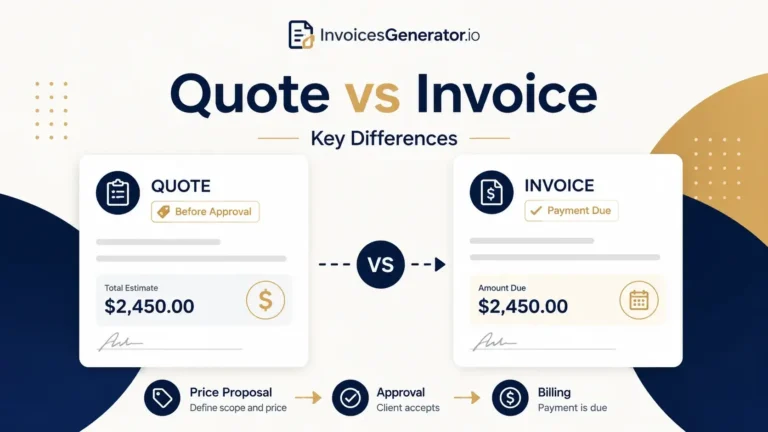
A quote shows proposed prices before the buyer confirms a purchase. If accepted, the buyer may later issue a purchase order.
See our quote vs invoice guide for the complete comparison.
Pro Forma Invoice
A pro forma invoice provides preliminary billing details before final invoicing.
It can support approvals, advance payments, or international transaction requirements.
See our pro forma invoice vs invoice guide for more detail.
Receipt
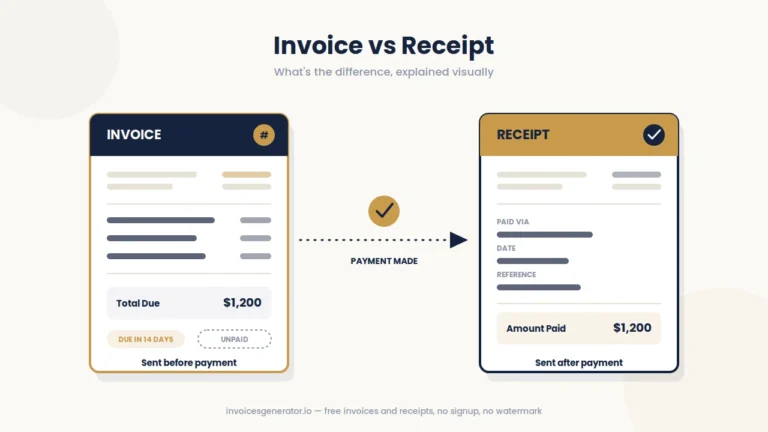
A receipt confirms that payment has already been received. An invoice requests payment, while a receipt records completed payment.
See our invoice vs receipt guide for the full difference.
Frequently Asked Questions
Is a Purchase Order the Same as an Invoice?
No, each document serves a different role within the transaction. The buyer creates the PO, while the seller creates the invoice.
Which Comes First, a Purchase Order or Invoice?
The purchase order usually comes before the related supplier invoice. However, billing schedules can vary for deposits, milestones, or subscriptions.
Can an Invoice Include a Purchase Order Number?
Yes, suppliers often add customer PO numbers to related invoices. This reference helps accounts payable match billing with approved purchases.
Is a PO Number the Same as an Invoice Number?
No, both numbers identify separate documents within the same transaction. The buyer assigns the PO number, while sellers assign invoice numbers.
Can One Purchase Order Have Multiple Invoices?
Yes, one PO can support several invoices across partial deliveries. This also happens with milestone billing and scheduled service payments.
Can an Invoice Exist Without a Purchase Order?
Yes, some businesses accept invoices without formal purchase orders. Acceptance depends on contracts, purchasing policies, and internal approval procedures.
What Happens When PO and Invoice Prices Differ?
The buyer should review the difference before approving supplier payment. Approved changes may require updated purchasing records or corrected invoices.
Who Handles Purchase Orders and Invoices?
Purchasing teams usually manage POs, while accounts payable reviews supplier invoices. Suppliers create invoices, while accounts receivable tracks incoming customer payments.
Purchase Order vs Invoice: Key Difference to Remember
The purchase order vs invoice difference mainly comes down to purpose.
The buyer creates a purchase order to confirm an approved purchase. The seller creates an invoice to request payment from the buyer.
Both documents may contain similar prices, quantities, terms, and business details. Purchase orders support purchasing control before payment becomes due.
Invoices support billing, accounts payable, and final payment processing. Keeping both records accurate helps prevent mismatches and delayed payments.